
Quezon and the Ghost of Bertolt Brecht
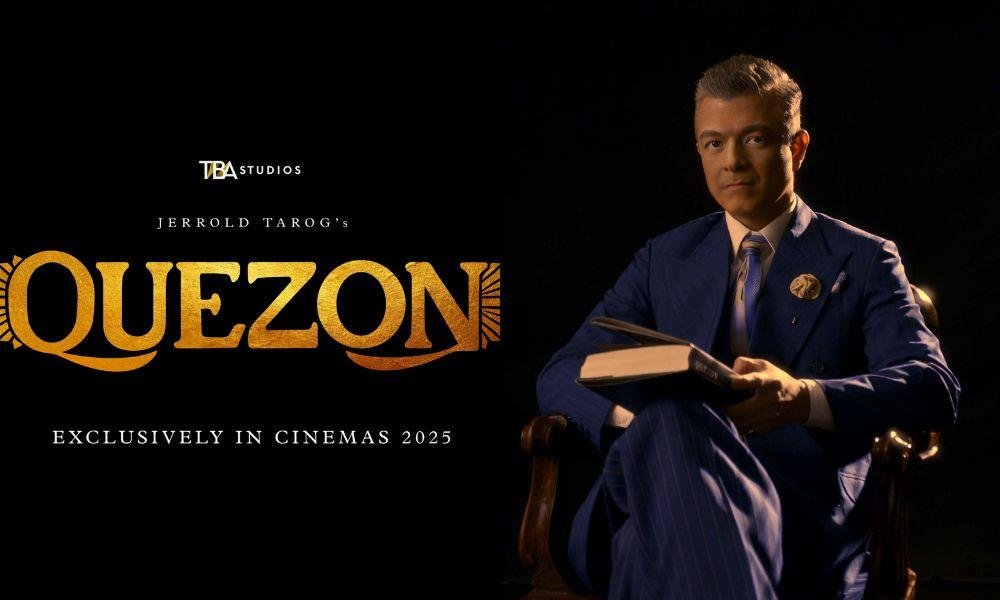
After watching the film Quezon, I came out of the theater with the same type of headache one can easily get from a specific form of theater. This type of headache can only originate from one form of theater known as epic theater by Bertolt Brecht, wherein the audience is to experience a particular effect known as the Verfremdungseffekt, which is commonly referred to as the alienation effect—although in this case, I would rather say that here we see “the estrangement effect” at its strongest from the theories of Brecht.
This should be no surprise to those experienced in theater acting, but to everyone else (especially those not-so-inclined to the arts), this would be beyond notice. This comes as no surprise because, as we examine the movie, we can essentially see the stereotypes one would find in a specific lineage of theater in the Philippines—that of the Philippine Educational Theater Association (PETA) and Dulaang UP (DUP) , alongside typical UP views.
Such a lineage is a key influence in the film, especially considering that the writers are both from UP’s art scene. Jerrod Tarog is a product of the College of Music in UP Diliman, whereas Tarog’s co-conspirator is an older mentor in the scene of UP and Philippine theater arts: the veteran playwright, director, and actor Rody Vera. This shows the strong UP blood that could only be so obvious to those who have been deeply immersed in the style of UP with respect to the arts—a highly social-realist and anti-establishment perspective. Unfortunately, in the most stereotypical UP way possible, they forget that they themselves are an establishment of sorts, being the mass media vanguards of the higher-educated art scene in the Philippines.
If souls could be separated from their evil and good halves, this movie essentially did just that. It effectively used magic with a bit of dialectical materialism to make the main character, Quezon, almost a caricature of the most stereotypical trapo (traditional politician) one could find in modern-day Philippines. This is odd, considering that the movie completely overlooks the genuine, reasonable attempts of the real Quezon himself in nation-building, even if they had several unintended consequences that still affect us to this day. For example, Quezon’s genuine attempts at social justice were also concommitant with things such as the settlement of the people of Luzon and Visayas in Mindanao (causing great tensions among settlers and locals) and the Sakdalista revolt. These are just some of many important historical events that were never mentioned in a film about a man who was likely to have been affected by—or himself played a role in—them.
Rather than giving us a film that would encourage further debate like the previous installations in the “Bayaniverse” (a term at which I cringe at), it instead gave us a product of the times—that cynicism which can be found only today amidst a new wave of corruption with no real redeemer to save us from it, unlike before. We no longer have a strong leftist opposition, and the liberals no longer possess that firebrand leadership they had and inherited post-EDSA. Both were significantly discredited after the Duterte administration, leaving a vacuum of decent politicians and idealists to be filled in by “good trapos” instead. These “good trapos” that I mention, I will only leave to the imaginations of the people.
Thus, it only makes sense that Quezon has become a villain. All trust in the institutional foundations of the very republic which he—along with Roxas, Osmeña, Recto (who is notably missing from the film) and others—had built has been lost in totality. The Third and Fifth republics are still of the same stock: a stock which today is being questioned and criticized, dragged out into the open for all to see. Yet it is ironic that, amongst the names I mentioned, only the Quezon family has ceased to be a player in this republic that their patriarch had built.
The Osmeñas still maintain a base in Cebu, the Roxases have effectively married into every other notable family, and the Rectos continue to sit pretty in Batangas, making Quezon the EASIEST target amongst them all to criticize in light of the republic these same flawed American-educated men created. Which only allows me to understand the severe crashout one of Quezon’s direct blood-descendants had in the theater. For all the men who could be blamed for the situation we are in now, the easiest person to point at is Quezon. I guess you truly can’t lose with Quezon after all—for the nation now has an easy scapegoat for its collective sins through this movie.
The foundations of the system built by these extremely flawed men have begun to rot; while we the people, by means of this film, are provided with the methodology and theories of Bertolt Brecht—thus enabling us examine our society and its problems through the rose-tinted glasses of UP-branded social realism. Unfortunately, both the sellers and buyers of these glasses lack the nuance necessary for the actual problem-solving process. So—once again—let this brand of UP glasses be yet another artifact of sensationalism and populism (just like that debate on who should be recognized as the first President of the Philippines) to be co-opted by those who can figure out how to co-opt these lenses for their future political efforts. The curse remains, and there is no justice or real conclusion to be found through these spectacles.
The movie failed to decide whether it was some kind of avant-garde contribution to the Philippine art and mass media space, or another educational piece. Instead, it has become something that even Brecht would probably not like himself, as it adopted a narrative which posits that power inevitably corrupts and consumes a person regardless of their erstwhile adherence to their principles. The only difference between Quezon as an idealist in Asia is that he lived long enough to see the dream come to fruition, although he died right before its completion—something which cannot be said for the likes of the democrat turned militarist Dr. Sun Yat-Sen or the one who died too young—José Rizal. Essentially, it leaves only those who know their history to object to the narrative left here by this movie.
Literally everything else was top-notch for Filipino cinema—it was just the narrative that could’ve been more polished and well-explored, once again falling into the trap of being of its time and not thinking beyond it.
Instead of having the necessary holistic debate that we need in this country in order to complete the project of Rizal, Bonifacio, Jacinto, Luna, Aguinaldo, and the likes of the illustrados and revive our country (something the Bayaniverse did inspire); we close this trilogy with bitterness and a descent into the dark tunnel of the Malinta “Führerbunker” tunnel’s abyss in the darkest days of the Second World War in the Philippines. And so I understand the indignation felt by Quezon’s descendants and various other historians when Quezon, as a character, was reduced to a caricature of a typical power-hungry traditional politician—something beneath his total worth as a human being. I call out this shame like the town crier before the city of London in the face of Mackie Messer’s crimes, with a limited audience to boot and no justice to be found yet—and possibly ever. A very Brechtian way to end such a trilogy indeed.
To Direk Tarog and Sir Rody Vera, and the rest of the cast and production; I applaud their work, clap and salute them, and give due credit where it belongs. However, there shall be no shouting of bravo here, for now is not the time for this. Instead, concern and irritation are what brought me to write this essay. I fear that with this film, the death of nuance in the Philippines begins again: but with death comes rebirth, so I can only hope and fear that the phoenix shall rise again.
As for Tarog’s timing, it can only be described as . . . a coincidence (?) that his movies come out during politically sensitive times. Which makes me wonder if the supposed future “Magsaysay” film, if it ever comes to be, will come out in 2027 right before another election, possibly even serving as a catalyst for the election of someone like the former President; just like what happened with the movie “Heneral Luna,” which shed light on a strongman who was all about action only to end up betrayed by those around him—sounds like Duterte, doesn’t it?
I will end with the following in this essay, and let the reader decide to whom and why I end it thus:
“Und die minderjährige Witwe
Deren Namen jeder weiß
Wachte auf und war geschändet
Mackie, welches war dein Preis!
Wachte auf und war geschändet
Mackie, welches war dein Preis!”
The author is a UP humanities student critical on all aspects. A descendant of multiple ethnic backgrounds and cultures, ranging from the immigrant experience to looking into the past of this country, a weird literal culmination of Philippine society physically and mentally. An anarchist at heart but a liberal in practice trying to still find the best in humanity but calling out mistakes when they need to be called out.