
A Love Letter to the G.E. Program
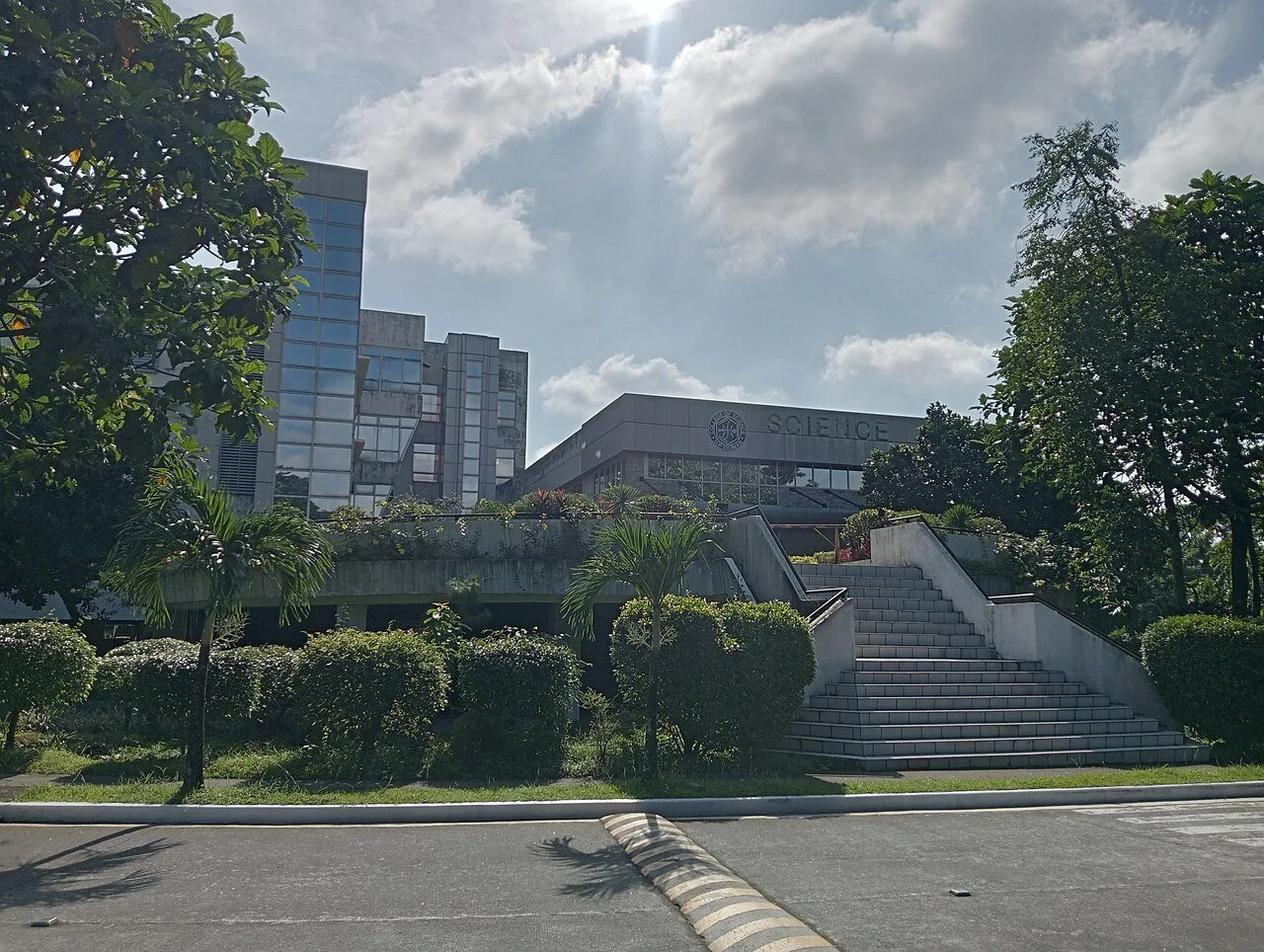
Ralff Nestor Nacor, “UP College of Science New Building, Oct 2023.”
In the beginning of the course, it was emphasized that this was mainly a course for students outside of the social sciences. And that makes much sense! After all, what use is a beginner course for students who are already steeped in the principles and methodologies of the social sciences?
I, myself, come from the natural sciences—chemistry, which is probably, with physics, the most detached science from the human person. In our class, there were a number of chemistry students, which at first made me appreciate the idea of the course: that is, to give these students who only think molecularly a different lens with which to see the world.
However, as I have already observed early on in my undergraduate life; in fact, during my very first GE class with my chemistry block in my freshman year; chemistry students don’t really think molecularly all the time! I observed, quite interestingly, that while students from CAL or CSSP can, in their free time, wax eloquent about their field, chemistry students generally leave the chemistry in the lab!
Looking back, I wouldn’t really consider this a flaw. Chemistry may be important or even crucial in the functioning and progress of our civilization; but at the end of the day, when you are faced with another human person, be it over a meal or a bottle of beer, there are far more important topics to discuss than chemistry.
I guess this has been my bone to pick with my generation of UP Students. When I think of UP, I am always left in awe. To imagine how much of our country’s history was sown in these streets, these buildings, or perhaps, in the hearts of the people who line the bulwagan ng dangal; I cannot help but be humbled. Seeing my littleness, my stubbornness, my laziness against the brilliance of our alumni, I am left to question what part I am called to make on top of theirs. What am I going to make of my being an iskolar ng bayan?
Many times, I have thought that this part in the fabric of our nation’s history cannot be made in the field of chemistry. The thing with the scientific community is they are cut dry, globalistic, and severely objective. There is a sense that science is something that the whole world builds together. There is no American science as there is no Filipino science. Science is science. This is just the way things are in the scientific world. While it is possible to be patriotic in the ideals that drive on your research, your contribution to the body of knowledge, at the end of the day, is shared by humanity as a whole.
And I guess, many in my generation have drunk the kool aid. There is a growing sense that you study in UP to be good in your field, you go out to work and be a cog in the machine, maybe make some money and that’s it! As a consequence, they look at UP not as the great arena of ideas, of Filipino ideas, but just a training ground. They just strive to get the next uno and move on.
In 2024, during one of the presentations in the anniversary of the College of Arts and Letters. The speaker described the vibrant history of the General Education Program of UP back in the day. That’s when it clicked for me. Perhaps, the reason why so many of our alumni took active parts in nation-building was because then, education in UP was truly liberal.
It was not only the students of CAL or CSSP who participated in this liberal education but every single UP student! Personally, I am not satisfied with my UP education. I feel cheated. I don’t feel like I really participated enough in the marketplace of ideas. Is it because I was unfortunate enough to choose a natural science program? I cannot help but see this as an injustice, not only for me but even for the country. One can only imagine how many great minds were held back by the robotic spirit dominating contemporary education.
Suffice it to say, I loved all of my GE courses. In these courses I felt free to express my thoughts. The horizons felt open to any possibility. And even my peers seemed to uncover their own voice, which seems anathema in the natural science classroom. That is to say that every UP student has the potential to be a malaya at mapagpalayang iskolar ng bayan.
What I’m trying to say is that the current stunted GE program of the university is a disservice to the country. It seems like the university is more interested in producing employees than leaders.
On top of this, it is still so hard to enlist GE classes! An average UP student today could wait years to take a required GE course! Makes one think, if the university is this unserious about imparting a formation to its students (basically letting the students fend for themselves), what values are they getting and from where?
One can only dream of better days.
Today, however, as I look back on this semester, I am satisfied but still left with a yearning for more. I am happy to have spent my Monday afternoons with a classroom of critical thinkers. We may have been disappointed by the university but an iskolar ng bayan is never prevented by structures. Anyone who desires an education will seek and find it wherever it may be.
There may be many who just pass by the university to get skills, but there are still many who proudly take their place, looking back as well as looking forward. Our GE courses may not give us all the answers for society’s ills but I’d like to believe that all who complete any course will at least have the skill to ask questions, not only externally about structures and phenomena; but also internally, about one’s own influences and values.
For as long as the General Education curriculum exists, I daresay there can be hope for the future. The hope that somewhere, an iskolar ng bayan buried deep in routine and fatigue still continues to see, to hear, to feel, and to ask some questions.
Christian Ang is a board member of the Collegium Perulae Orientis. He received his Bachelor of Science degree in chemistry from U.P. Diliman.