
No Wall Can Keep God Out: My Conversion to the Catholic Faith
If someone were to ask me when I became a Catholic, there would really be more than one answer. My Catholic life sacramentally began during my baptism in Christ the King Parish parish over at Green Meadows. But my family did not practice religion: we did not go to Mass on Sundays, though we would pray sometimes and keep statues of the Blessed Virgin. My father did not even believe in God, while my mother—being a Chinese Filipino—blended her Catholicism with Chinese folk beliefs.
It was actually my sister who gave my first catechesis. She went to the Immaculate Conception Academy (run by the M.I.C. Sisters) followed by Everest Academy (run by the Legionaries of Christ), and during bedtime she would always talk about Heaven and Hell while teaching me some basic prayers such as the Our Father. I was also exposed to basic religious literature and (like most children) was rather familiar with a few Bible stories, although I was ignorant of the message of Salvation.
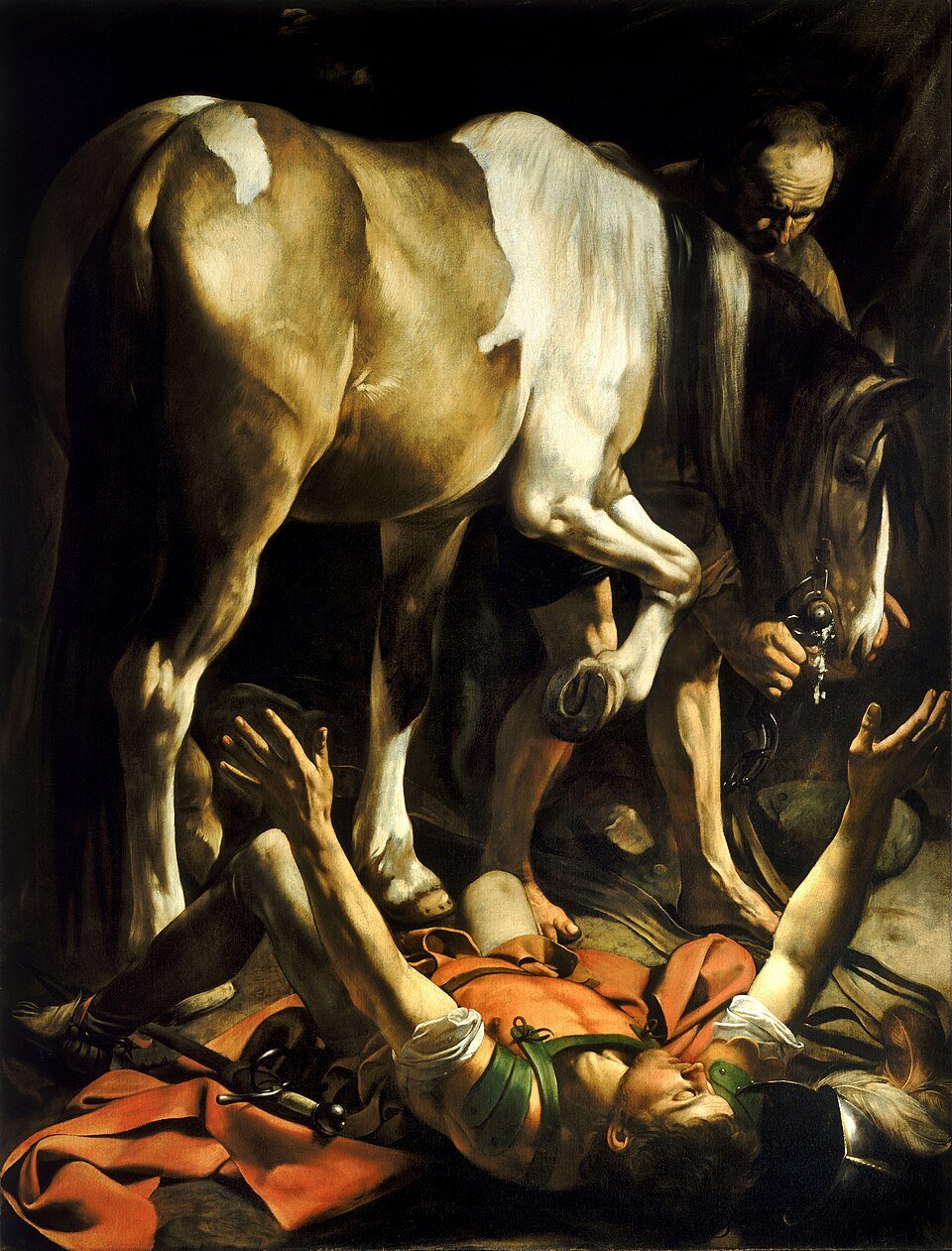
It may seem strange, but this shows that no wall can ever keep God out. It is very tempting to look at the world, despair at its state, and seek to isolate ourselves from it. But we must always remember that God is powerful enough to break down our barriers and touch our hearts, minds, and souls.
A friend of mine was once a very devout Shia Muslim. In fact, he was a sayyid—a direct descendant of Mohammed, and was very well-read in both matters of comparative religion and Shia literature. He never had a doubt in his mind about the truth of Islam, even when he was reading books on Christian theology to aid him in his debates with Christians.
We know many people like him today: people who are securely anchored in choosing a life that is not of Christ. And sometimes, because we find ourselves so limited in what we can do to help people find the Truth, we end up dismissing these people as incorrigible, people who cannot be changed.
But what God can do surpasses all human wisdom. In time, my friend stopped engaging in religious debates and started working on his relationship with God, Whom the Church teaches Muslims also believe in. One day, he decided to accompany his friend to Mass when, in the moment of consecration, he encountered the presence of God—at which point he was compelled to acknowledge the Divinity of our Lord Jesus Christ. This is a fine demonstration of the work of the Holy Spirit, even to those who seem, at first, to stand firm in their rejection of the Gospel.
And in my own life, as far as I was from God, He still drew near to me. Like most Chinese-Filipino children, my parents sent me to Catholic school: Xavier for two years, Everest Academy for another. The idea of receiving Holy Communion was particularly exciting, although it did not register to an 8-year old me that the Blessed Sacrament really was God Himself.
Nevertheless, I received basic instruction in our Catholic formation classes, though I remained in the dark about the central message of the Gospel—the redemption of man by Jesus Christ. This would only come after my encounter with two unexpected Protestants who taught me about what Jesus did—the same Jesus who brought me back to the Catholic faith.
After I got kicked out of my old Catholic school, my parents transferred me to a non-sectarian international school in Quezon City. As a fourth-grade student I found it difficult to make the best out of my new situation and soon stopped going to class or doing my homework. Yet, my teachers always reached out to me and did their best to help me, even as I almost never cooperated with their efforts (somewhat like God’s patience with an inveterate and sinful generation).
One of them, my history teacher, was a Protestant Christian who treated me as his own son; and so we eventually started to talk about the Christian faith as he started to talk about some of his concerns about the Catholic Church. Eventually, one afternoon, he interrupted his history lesson to talk about the importance of accepting Jesus into one’s life and then—as the both of us had prepared to do months prior—he asked us if we would accept Jesus as our Lord and personal Savior. We all said “yes.”
Within a month, I also met my Protestant uncle, having many conversations with him about Christianity. Inspired by their example of life and the soundness of their doctrine, I decided to adopt the Protestant Faith at eleven years old with the intention of formally converting upon my eighteenth birthday. As we know, that didn’t happen.
Instead, I turned to social media and formed a small following, adopting Antinomian beliefs and using my newfound ‘salvation’ to elevate myself above those ‘lost sinners’ who were blamed as the sources of all my problems. As a way to defend myself, my professed Christianity became a source of my pride as I even began arguing with people about the Trinity and the existence of God. It came to a point, actually, wherein I rejected the relative distinction of persons as a reaction against some of my classmates who did not believe in the Divinity of Christ, and even had plans of starting my own Church as a “preacher.”
It all came to a head when I decided, one day, to go on a “debate” with a prominent young atheist over at Instagram Live. As you would expect, it was a rather humiliating experience for me. During that debate, however, I revealed my background as a Catholic thinking of becoming a Protestant, thus attracting the attention of a friend group of young traditional Catholics who promptly reached out to me.
We talked about some of my issues about Catholicism and, rather hastily, I professed my reversion to the Church. But this was by no means the end of it. I was not a very big fan of Pope Francis back then, for I believed that he was too “liberal” and too willing to change doctrines. My new friends, however, were mostly “sedevacantists” who did not believe that Pope Francis (and all other popes after Ven. Pius XII) were truly popes.
And so, I adopted the sedevacantist position—without really understanding the reasons why I did. They told me to attend the Tridentine Mass with the Society of St. Pius X (SSPX) because (according to them) the New Mass was invalid, so I began to go to regular Sunday mass at the SSPX. Nevertheless, this was the first time I started to go to Mass regularly. I would go so far as to say—with irony—that it was from outside the Church that I started taking the steps to return to Her motherly bosom. Eventually, I would abandon the sedevacantist position and return to full communion with the Catholic Church—a story for another day.
Indeed, God does good from the unexpected and the unexpecting. If not for the Protestants in my life, I do not know if I would have renewed my commitment to Jesus Christ today. If not for my friends, I do not know if I would still be writing here today as a Catholic in good standing.
It is easy to ignore those who are outside us, who are separated from us. It is easy to judge the presence of former Catholics in our lives as an uncomfortable burden or an inconvenience. Sometimes, they may even threaten us. But one cannot limit the Holy Spirit from speaking through them, just as he did with Balaam (Num 24,2) and Caipahas (Jn 11,51), who were His own enemies.
Thus, the instrumentum laboris for the Synod on Synodality made an insight which struck me deeply: "If listening is the method of the Synodal Process, and discerning is the aim, then participation is the path. Fostering participation leads us out of ourselves to involve others who hold different views than we do. Listening to those who have the same views as we do bears no fruit. Dialogue involves coming together across diverse opinions. Indeed, God often speaks through the voices of those that we can easily exclude, cast aside, or discount. We must make a special effort to listen to those we may be tempted to see as unimportant and those who force us to consider new points of view that may change our way of thinking."
Today, we are faced with people who have grievances against our Church, people who for diverse reasons speak out against Her. The voices and cries of those who oppose us can be a way for God to speak to us and show us the signs of the times. It is our witness, in the words of Saint Peter Faber—and the Holy Father himself, that can lead our enemies to a “restlessness” in their hearts, as Scripture witnesses: “If your enemies are hungry, give them food to eat, if thirsty, give something to drink; For live coals you will heap on their heads, and the Lord will vindicate you” (Rom 12,20).
We must therefore find out the needs of even our enemies, and be ready to provide them with that living water of which one can never thirst, as Christ did to the Samaritan woman (Jn 4,14). Such is the essence of synodality.
