
The Contemporary Aversion To Power
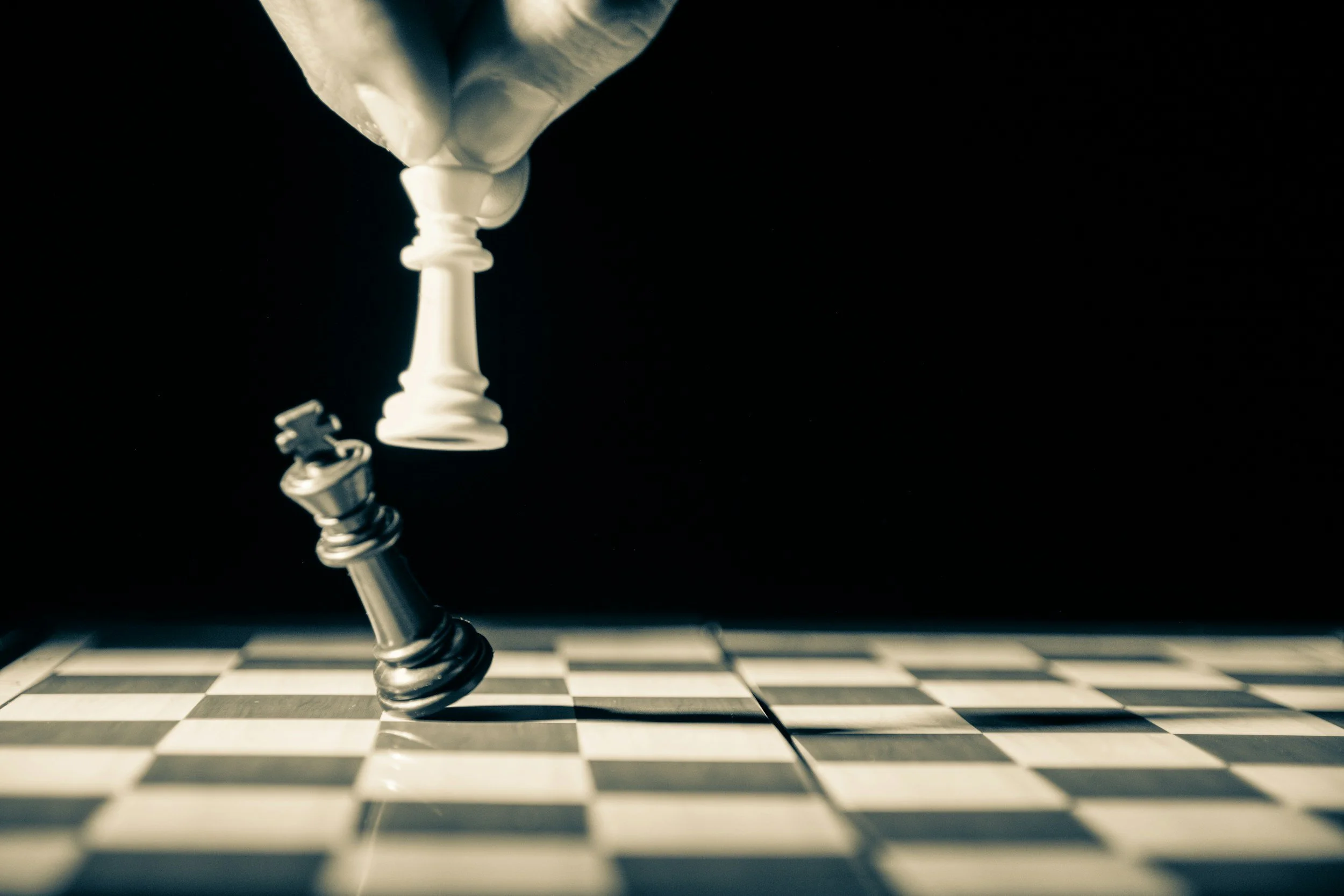
In liberal democracies, power is always spoken about negatively. It corrupts, as per the common refrain. It is assumed to be in opposition to the truth, since the only purpose of power is to be spoken against by the truth, and that anyone who exercises power in any way, shape or form will always pave the road towards its abuse.
While this can initially be dismissed as a mere hutch, if one looks beneath the surface, this avoidance is baked into the premise, and any attempt to contest this orthodoxy is met by cognitive or emotional reflexes. The secret sauce in many liberal democracies, specifically the most dysfunctional and terminal ones, is an implicit allergy to a legible and central authority—as the default of these elite institutions is to always pick anarchy or the rule of none over monarchy, or the rule of one. This stimulus is fundamental to how any oligarchy perpetuates itself.
Populism is seen as a threat usually because populists of all stripes tend to evoke sovereignty as their front and center, and sovereignty carries with it the desire for leadership that oligarchs heavily despise. To make such dissonance accepted as the status quo, this oligarchy deliberately conjures the separation of powers as sacrosanct—for the violation of this procedure means a return to necessity, particularly of a historical and a civilizational one.
The founding stone of democracies that turn into oligarchies is always ironically an age where authority is widely acknowledged as beneficial. Think of the reputations of Wu Zetian, El Cid, Washington, Napoleon, Garibaldi, Lenin or Ataturk: always a mix of veneration and grudging seething—for if they are to be transported to the present day, they will be cast aside as tyrants and put on trial.
The closest parallels to these figures today would be Chavez, Orban, AMLO and Bukele—and they are castigated as would-be dictators, even if they remain wildly popular and effective. The oligarchs always fear a return to necessity, for a return to necessity is a return to decisiveness, and a return to decisiveness is a return to a world of no excuses. And a world of no excuses is against the oligarchs’ preference for indecision and stagnation, for motion is their death knell.
The culture war thus provides an outlet for all these energies hitherto sublimated into the shadows around the cave, at least until it no longer does the trick. Back then, these ruminations were easily manufactured as consent—especially when traditional media, through advertising, ownership and sources, would always make sure that mediation is their sole domain. Thus, the panic towards democratic backsliding and disinformation can be read as a humiliation directed towards the usual suspects, as their claims are eventually found out to be built out of pure wind.
In this framing, the challenges to liberal democracy embodied by the populist upheaval can be viewed as the scaffolding of the former trying to maintain oligarchy as opposed to the yearning for monarchy: monarchy not as it is stereotyped in the way our schools have taught it, but monarchy as the battering ram of the hoi polloi—of the proletariat against the bourgeoisie that resides in the cities. For the populists, in their varying ways, have committed the greatest sin: to search for direction within a ruling order that only wants stasis and time frozen in amber. And paradoxically, the rule of one, usually of a party, tends to produce an outcome that is simultaneously effective and impersonal.
For there is no exclusivity, and all are rendered equal in attention and in priority. All are disposable, for they are all servants to causes larger than themselves—irrespective of where they came from. The ones who preside over this ship of state can be easily purged or dismissed once they have failed in their duties and obligations without much fanfare, as what Putin and Xi do yearly. And stranger still, such a mechanism is proven more durable than an Epstein blackmailing the perverts and deviants in suits, robes and garments—for true power is indifferent to one's subjectivity and individual will, even to the one who sits at the top of the pile.
Allen Casey S. Gumiran is an essayist and a lecturer specializing in Geopolitics at DLSU-Dasmarinas, where he graduated with a Bachelor of Arts degree in Political Science in 2018. He is currently taking up his Master of Arts in Philippine Studies at the University of the Philippines Diliman. A contributor to Esquire Philippines and Rappler, he specializes in current events, foreign affairs, military science, philosophy of history, psychoanalysis, and political economy.