
Deborah: A Woman in a Man’s World [Canon Chronicles #3]
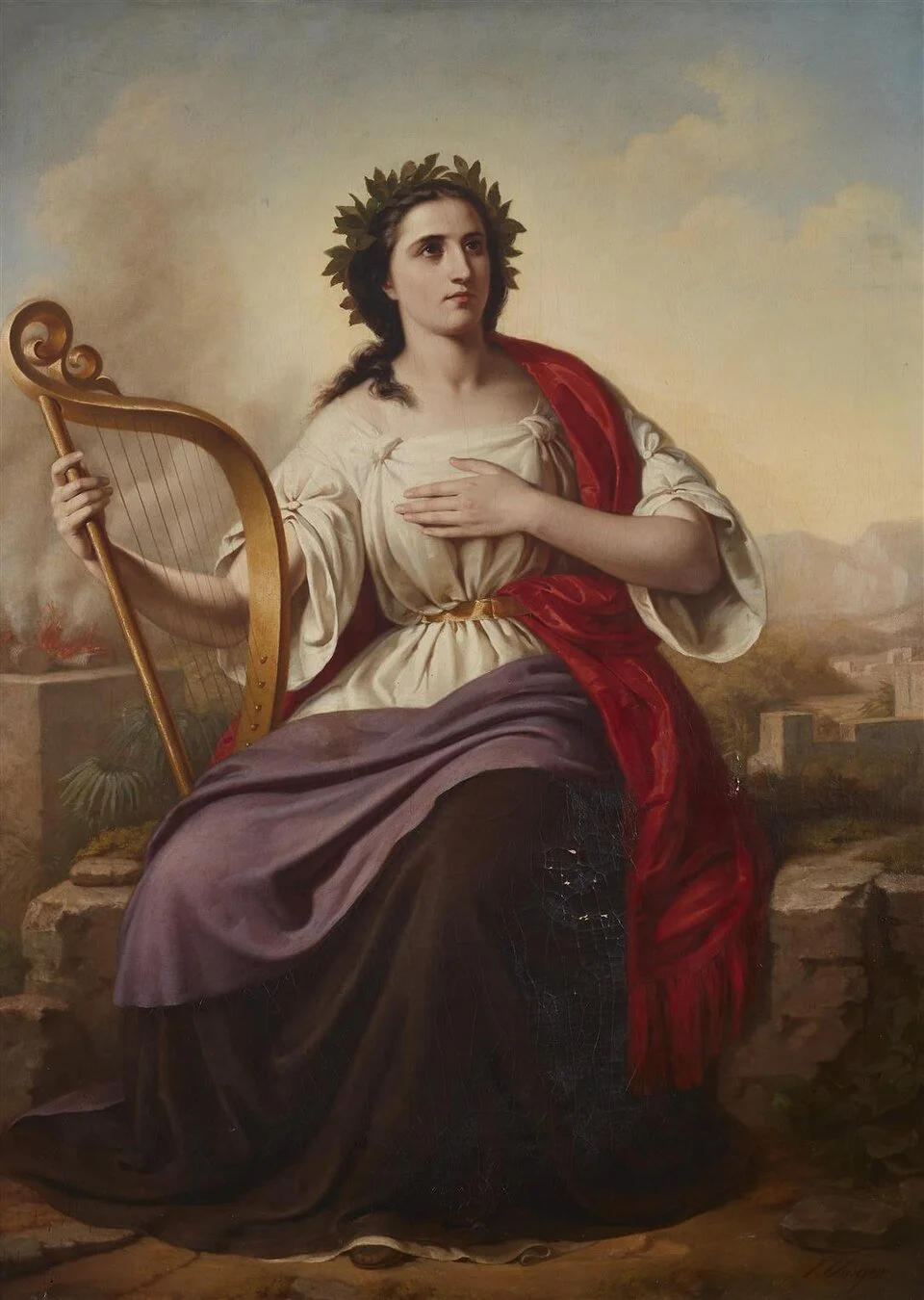
Deborah, the only female judge of Israel, rose to prominence during one of the most chaotic periods in ancient history.
Her lifetime likely overlapped with the Bronze Age Collapse (1200–1150 BC), when climate change triggered earthquakes, famines, invasions, mass migrations, and the collapse of kingdoms across the Near East, consumed by fire and war.
Israel During Deborah’s Time
In the centuries before the rise of the Israelite monarchy, the tribal confederation of Israel existed in a world dominated by great regional powers. Egypt to the south, the Hittite remnants to the north, and the rising kingdoms of Babylonia and Assyria all competed for influence over the ancient Near East, while the Canaanite city-states controlled much of the land Israel sought to inhabit.
Tribal Israel did not live in isolation; it was constantly being jostled by the geopolitical struggles of stronger and more established civilizations.
This was the era of the Judges: a time marked by cycles of war and peace, expansion and contraction, survival and recovery. The Judges were not kings, but political figures who emerged when the tribes faced external threats or internal disputes.
They had to navigate not only battlefields but also diplomacy, alliances, and the delicate balance of power among neighboring states. The survival of Israel often depended on careful political maneuvering as much as military victory.
Israelite society during this period was deeply patriarchal, a tradition that traced its roots back to the time of Abraham and the tribal patriarchs. Leadership, inheritance, and authority were overwhelmingly male-dominated.
For such a society, in a time of national danger and political uncertainty, to place its trust in a woman was an extraordinary decision.
Deborah: The Walking Enigma
Very little is recorded about Deborah’s early life. She is introduced in the bible simply as “Deborah, a prophetess, the wife of Lappidoth,” suggesting she was already respected and known for her wisdom before the events described in Judges.
By the time she appears in the historical record, she is already serving as a judge, settling disputes under a palm tree in the hill country of Ephraim.
During this time, the Israelites were being oppressed by the Canaanite king Jabin of Hazor, whose army was commanded by Sisera, a general who possessed 900 iron chariots (the ancient equivalent of tanks).
For 20 years, the Israelites lived under this military pressure.
Until One Day, Deborah Had Had Enough
With the chaos of the Bronze Age Collapse unfolding before her very eyes, Deborah sensed the opportunity of a lifetime and decided to act.
She summoned the military leader Barak and delivered a prophecy. He was to gather an army and confront Sisera.
Barak agreed to go, but only on one condition: Deborah herself would come with him. She agreed, but issued a warning: the honor of the victory would not be his, for the Lord would deliver Sisera into the hands of a woman.
The Israelite forces gathered at Mount Tabor. From this high ground, the battle unfolded in a way that has been debated and retold for centuries.
Some believe Barak deliberately lured Sisera’s chariots into unfavorable terrain. Others believe he launched a sudden attack at the exact moment Sisera’s greatest advantage failed him; heavy rains turned the battlefield into thick mud, immobilizing the iron chariots that once made his army invincible.
What followed was chaos. Sisera’s army collapsed, and the commander himself fled on foot, abandoning his chariot and his men.
He sought refuge in the tent of a woman named Jael. She welcomed him, gave him milk, and allowed him to rest. But while he slept, she drove a tent peg through his head, killing the feared commander where he lay.
With Sisera dead, Canaanite military power collapsed, and Israel was freed from oppression.
Aftermath
After the war, Deborah and Barak sang what is now known as the Song of Deborah, one of the oldest poetic passages in the Bible. The song celebrated the victory, praised the tribes who came to fight, and condemned those who stayed behind.
And after this victory, the land had peace for forty years: a generation was spared from the shadow of war.
It took a woman of profound sagacity to recognize that in times of great disruption, the old chain that binds can be broken, and freedom can be won by those wise enough to seize the moment.
Canon Chronicles details the lives of well-known historical figures in the Bible and in the Catholic Canon.