
Edmund Burke on Marriage
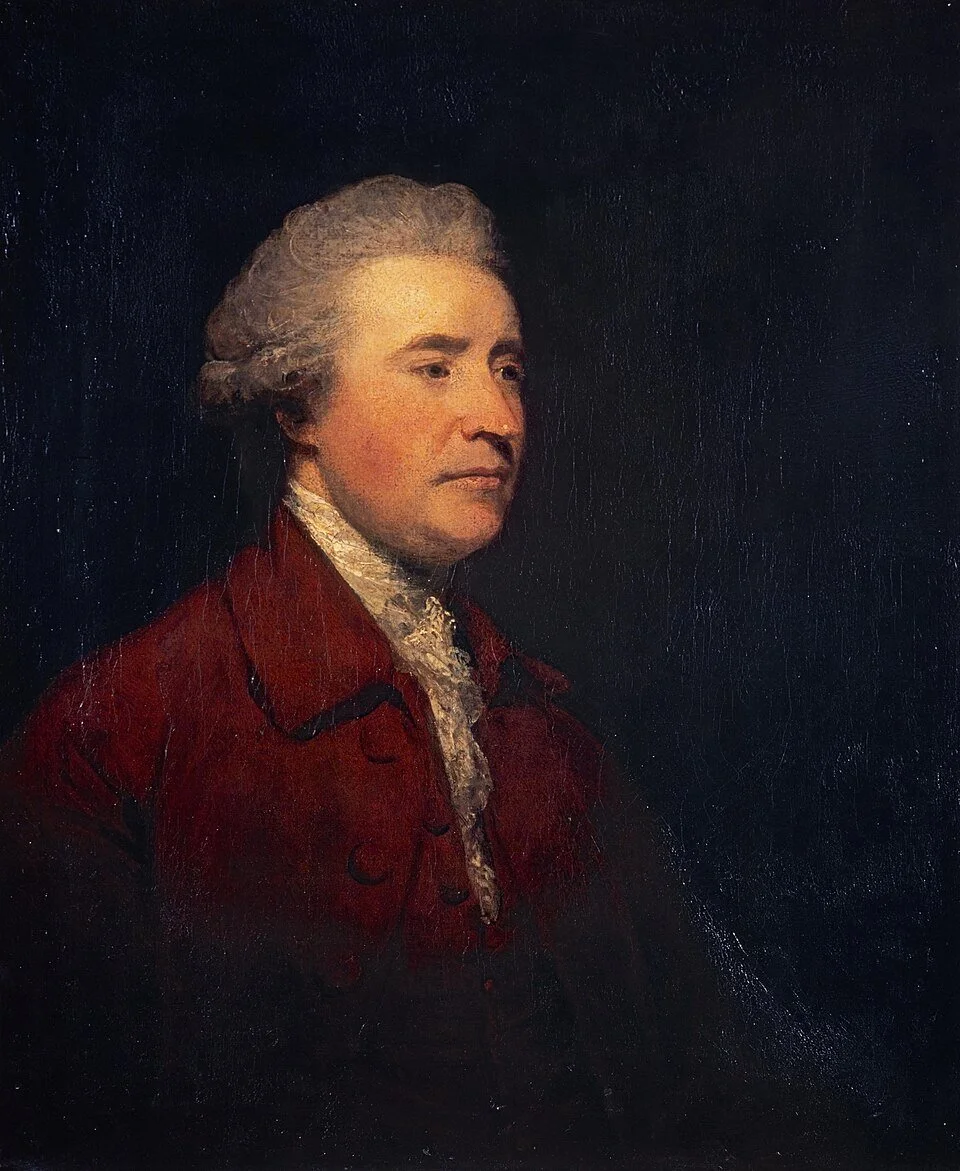
Edmund Burke (1729-1797) was one of the most influential political figures in Anglo-American political thought. He is widely regarded as the father of Anglo-American conservatism (Russell Kirk’s The Conservative Mind begins with Burke) but was also praised as a great liberal (Lord Acton considered Burke one of the three greatest Liberals). Burke has been a key inspiration for many political philosophers since, most notably Sir Roger Scruton.
Although much has been written on Burke, practically nothing has been written on his views on marriage. The most obvious reason for this being that he barely wrote anything regarding marriage. Within Payne’s entire 4-volume Selected Works of Edmund Burke, I have found only one noteworthy commentary on marriage. This comes from a letter to Parliament concerning peace with France, titled as “On the Overtures of Peace.”
Before focusing on this section, it’s worth knowing the surrounding context: Edmund Burke was best known for this Reflections on the Revolution in France, the single most famous criticism of the French Revolution. In both his reflections and this letter, he emphasizes how the revolutionaries struck down the civil order in favor of disorder. He does not mean this in a totalitarian sense, that the revolutionaries were pushing back against the strong arm of the almighty state, but rather that the revolutionaries were tearing apart the natural organic institutions that form civilization. To Burke, society was something that formed more bottom-up, through tradition and voluntary associations. It was the very fabric of society, including its morals, that the revolutionaries were tearing apart. In On the Overtures of Peace, he writes that
In their culture it is a rule always to graft virtues on vices. They think everything unworthy of the name of publick virtue, unless it indicates violence on the private. All their new institutions, (and with them every thing is new,) strike at the root of our social nature.
That last sentence is especially Burkean. The natural organizations of society are rooted in our nature, and develop through tradition. They conform to our social nature. The revolutionary institutions are the opposite. They are all new, rooted in nothing, and rather than complement our nature, they attack it.
In the very next sentence, Burke turns his attention to marriage as an example of one natural institution.
Other Legislators, knowing that marriage is the origin of all relations, and consequently the first element of all duties, have endeavoured, by every art, to make it sacred.
Here Burke places an intensely high value on marriage, one that is reflective of conservatism as well as Christendom, in addition to the broader sentiment at the time. Marriage is the foundation of society, because it is the “origin of all relations.” Everyone begins their life with relation to a mother and a father. From then on, through their family, they develop other relations to their larger community.
As the first element of all duties, it is through the family that everyone (ideally) learns their basic moral obligations. They learn to honor their father and mother, to do their part in the household, to care for their siblings, and from there learn their broader obligations to society. Thus it can be implied that Burke recognizes that marriage is a necessary component to a civilized society, and to the extent that marriage suffers, all of society suffers. Burke then continues:
The Christian Religion, by confining it to the pairs, and by rendering that relation indissoluble, has, by these two things, done more towards the peace, happiness, settlement, and civilization of the world, than by any other part in this whole scheme of Divine Wisdom.
As an Anglican born to a Catholic mother, Burke supports the wider Christian teaching that marriage is confined to two, and that it is indissoluble. This was still the common view even among Anglicans at the time. Burke insists that this ordering of marriage is integral to civilized society. Although it sounds hyperbolic, it is worth confining his statement to a sociological perspective, not a claim that the institution of marriage was overall more important than the Crucifixion and Resurrection. Burke then turns his attention to the revolutionaries:
The direct contrary course has been taken in the Synagogue of Antichrist, I mean in that forge and manufactory of all evil, the sect which predominated in the Constituent Assembly of 1789. Those monsters employed the same, or greater industry, to desecrate and degrade that State, which other Legislators have used to render it holy and honourable. By a strange, uncalled-for declaration, they pronounced, that marriage was no better than a common civil contract.
Burke’s criticism here, that marriage is reduced to a civil contract, is not unique to him. It has been voiced by many great thinkers from his time to the present day, one notable example being Pope Leo XIII in his marriage encyclical Arcanum. When marriage is reduced to a civil contract, it then becomes malleable. For millennia prior, marriage was regarded as something that precedes the state. The state is a guardian of it, but has no right to manipulate it. An act of legislation cannot alter what marriage fundamentally is. By attempting to reduce it to a civil contract, marriage falls entirely under the control of the state, to be manipulated by legislators.
Burke then goes on to decry the promotion of divorce and the ruination of marriage by the revolutionaries before moving onto other topics. Although much of Edmund Burke’s views on marriage could be implied from his worldview as a whole, these few sentences give us concrete assertions: Marriage, properly understood as an indissoluble bond, is integral to civilized society.
Nathan Kreider is a contributor to the Mises Institute, Being Libertarian, the Foundation for Economic Education, the Austrian Economics Center, Crisis Magazine, and CatholicExchange.com.