
The Beauty and Uncertainty of Waiting: A Pentecost Reflection
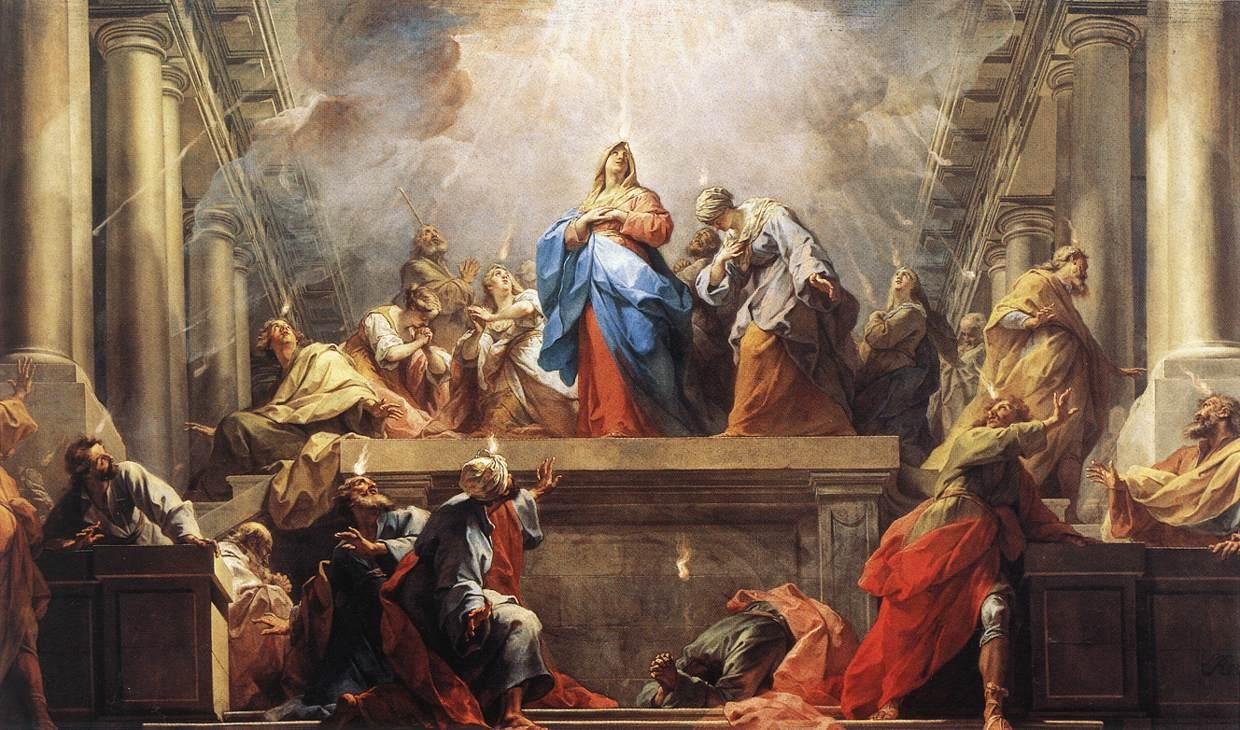
One thing must be considered when reflecting upon the lives of the apostles before they ventured forth to “go therefore and teach all nations, baptizing them in the name of the Father, and of the Son, and of the Holy Ghost” (Matthew 28:19).
They did not fully know what awaited them.
Christ had ascended unto Heaven and left the tomb empty. The promise had been spoken. Yet they still did not foresee what would come thereafter.
They did not know how the Holy Spirit would descend upon them.
They did not know that frightened fishermen would become heralds of nations, nor did they know that their words would shake empires, convert hearts, and echo throughout centuries.
But somehow... They waited.
“And while staying with them he charged them not to depart from Jerusalem, but to wait for the promise of the Father” (Acts 1:4).
There is something profoundly beautiful in waiting.
Not a waiting born from laziness or hesitation, but a waiting rooted in obedience and trust. The apostles remained in the Upper Room not because they possessed certainty, but because they possessed faith. Though fearful, confused, and perhaps even anxious, they remained together in prayer with the Blessed Virgin Mary.
“And all these with one accord devoted themselves to prayer” (Acts 1:14).
The world today fears uncertainty. We desire immediate answers, instant direction, and visible signs before taking a single step. Yet Pentecost reminds us that God often prepares souls in silence before sending them into mission.
The apostles waited in uncertainty, but Heaven was already moving.
For nine days they prayed. For nine days they hoped. For nine days they remained faithful without seeing.
And then came the fire.
“And suddenly there came from heaven a sound like a mighty rushing wind… And there appeared unto them parted tongues as of fire, and it sat upon every one of them” (Acts 2:2–3).
The same men who once hid behind locked doors now proclaimed Christ openly before the world.
Such is the power of the Holy Ghost.
St. John Chrysostom once wrote:
“The Spirit came not simply to comfort them, but to transform them into another kind of men.”
Indeed, Pentecost is not merely the descent of divine power — it is the transformation of fearful hearts into courageous witnesses.
The beauty of waiting is that it teaches the soul surrender. In waiting, pride is stripped away. We are reminded that grace cannot be forced, only received. The apostles could not manufacture Pentecost by their own strength. They could only remain faithful until God’s appointed time arrived.
As St. Augustine beautifully said:
“God had one Son on earth without sin, but never one without suffering.”
And perhaps waiting itself is a form of suffering — the quiet ache of not yet knowing, the hidden struggle of trusting while the future remains veiled.
Yet Pentecost teaches us this truth:
God is never absent in the waiting.
The Upper Room may have seemed silent, but Heaven was preparing fire. The apostles may have felt weak, but grace was already approaching. And perhaps many of us today live in our own Upper Rooms — waiting for clarity, healing, purpose, direction, or peace.
We pray.
We hope.
We remain uncertain.
But if Pentecost teaches anything, it is this:
The Holy Ghost still comes to those who remain faithful in waiting.
“Be still before the Lord, and wait patiently for him” (Psalm 37:7).
So the apostles waited.
And in that waiting, the Church was born.
Xelestine Gabriel Payte is a part-time faculty member at the University of Asia and the Pacific’s College of Arts and Sciences.