
Moses: More Real Than Myth [Canon Chronicles #2]
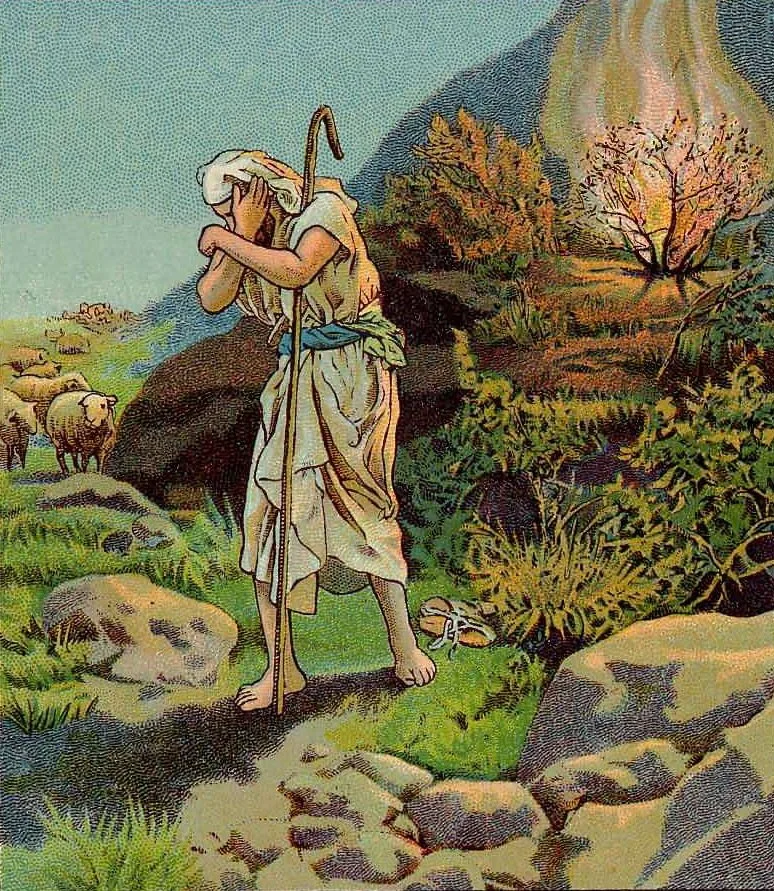
Moses came from a Hebrew lineage of migrants shipped to Egypt between 1500 BC and 1200 BC, in time for Joseph, son of Jacob, to exercise privileges in Egypt. Whilst we can never fully assert that the Hebrews flocked to Egypt due to exigency, it is nevertheless a tale that alliterates with that of the Hyksos, who invaded Egypt from Canaan and ruled regions during the Fifteenth Dynasty.
Even setting aside the Hyksos angle, large-scale human migration was already well attested by the time of Moses (the Bronze Age). Trade between the Mesopotamian and Indus Valley civilizations, in particular, is evidenced by surviving artifacts and relics. The Habiru/Apiru—whose linguistic similarity with "Hebrew" led some scholars to claim they are the same—are attested in the Amarna Letters as a category of "outsiders" enlisted by Egyptian pharaohs to supplement their forces and perform manual labor.
The Bible mentions that Moses was born to extreme callousness under the Pharaoh's genocidal purge of Hebrew progeny (Ex. 1:22). Egyptian records do not evidently depict mass murder of Hebrew children, but to arbitrarily ignore the sacred text is to reject one body of writing in favor of another. There are several ways to reconcile or explain away this seeming paradox:
(1) It is possible that, for some reason, the episode was excluded from royal Egyptian records, as in the case of the Roman Battle at the Harzhorn in 235 AD—a Roman–Germanic battle in an area beyond the documented movement of Roman armies. The struggle was never recorded in Greco-Roman annals, but its existence was later attested by archaeological evidence.
Many battles remained undocumented as their traces were ravaged by time: armor and weapons looted, smelted, or repurposed; bodies desecrated, stolen, devoured by wild animals, or recovered for proper burial; and the remainder washed away by floods and other natural phenomena. In the event of defeat, information may have been suppressed to prevent inspiring future revolts.
(2) It is also possible that the mass murder was not a systemic policy against an oppressed minority, but rather a natural yet temporary result of crushing a revolt, where women and children were indiscriminately slaughtered as reprisal; a typical occurrence in Greek, Roman, Chinese, and Mesopotamian wars and upheavals.
The Jewish writers may have added embellishments to the episode, as these serve a clear thematic purpose in explaining Moses' rise from obscurity. However, I see little reason to doubt the story's veracity. The exact sacred text does not shy away from calling out the wrongs of its illustrious figures, such as David's adultery, Jonah's fear and abandonment, and Rahab's prostitution. The exact sacred text that showered Moses with praise was also quick to point out his flaws: murderous rage (Ex. 2:11–12), disobedience at the Rock (Num. 20), and declining the call (Ex. 4:13). It is therefore likely that the general outline of Moses' life in the Bible was based on real historical events.
What about the crossing of the Red Sea? While the biblical account is written in dramatic, highly descriptive language, some researchers argue that natural explanations may underlie the story. Computer simulations, such as the one conducted by software engineer Carl Drews in 2014, suggest that under rare wind and tidal conditions, a shallow body of water could temporarily recede, allowing people to cross on exposed land. In fact, the phenomenon occurs twice or thrice a year on the island of Jindo in Korea, where the sea "temporarily parts for an hour" to form a land bridge that allows tourists to walk between Modo and Jindo Islands.
Critics have also questioned the veracity of the forty years the Hebrews spent in the wilderness, citing insufficient historical and archaeological evidence (Marina, 2025). Some see it as unlikely and contrast it with Alexander the Great's fast conquest of Persia. It should be noted, however, that Moses' warband was not a professional army of conquest. It did not have the best pathfinders, topographers, fighters, or sprinters to traverse the Sinai Peninsula without being harmed by hostile, warlike communities that dotted the land. En route, they would have faced significant resistance, slowing their planned migration to a turtle-neck pace—with a lot of back-and-forth as they suffered setbacks at every turn. Moreover, the migration may not have occurred in a single wave but in batches over a long period.
Even if we take the forty-year claim in the most literal sense of the word (many argue that it was a literary device to suggest a "very long time"), it was not outside the realm of possibility that a displaced population could wander in or around the same region for decades.
The Celtic Galatians of Anatolia, whom Saint Paul of Tarsus baptized en masse, originated in Central Europe. The Germanic Suebi tribe that Caesar fought during his Gallic Wars would found a kingdom in Spain centuries later. Moreover, the exiled Greek community in Bactria, which had been cut off from the wider Greek world for over a hundred years, was only reintegrated following Alexander the Great's campaigns.
To add to this, ancient writers considered Moses' historicity a closed case. Manetho, an Egyptian priest and historian, provided the most hostile account of Moses, describing him as a priest-turned-heretic who led outcasts out of Egypt. Meanwhile, the Greek Hecataeus of Abdera described him as a "wise and courageous leader" who left Egypt and colonized Judea. The Roman historian Tacitus mentioned the story of "Moyses" as the founder of a new religion.
Discrepancies existed among these writers, but this is typical of other historical figures like Alexander the Great and Julius Caesar. This wasn't a conundrum exclusive to ancient figures: Joseph Stalin and Christopher Columbus were also viewed differently, depending on whom one asked. It wasn't until the advent of the modern era that doubts arose about his existence.
The story of Exodus is one of the most famous biblical events, not only because of its central importance to Abrahamic religions, but also because it is a fascinating account of a daring escape by a small group of people from the clutches of a despotic regime. A band of warriors and their families defied the superpower of the day, battling their way through barren wastelands and surviving on meager means—an extraordinary feat that continues to amaze people the world over.
Canon Chronicles details the lives of well-known historical figures in the Bible and in the Catholic Canon.