
Reflection on Dorothy Day
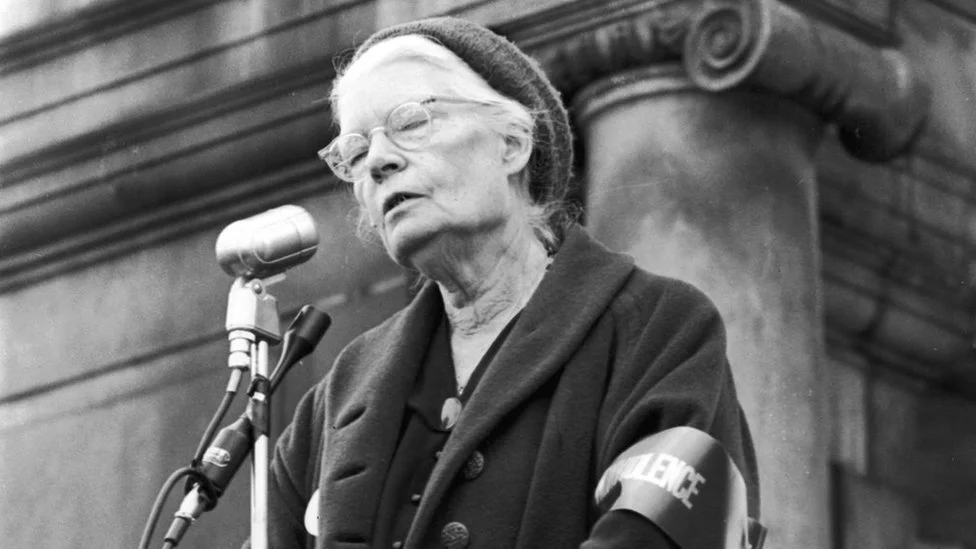
We often say, and without batting an eye, that saints are also sinners, they had their flaws, and were not perfect. We say it so much that it has lost its meaning.
And with most saints, these imperfections are almost only a figment of our imaginations. Only the good deeds, the great deeds make it to their biographies. And that's probably because until very recently, ordinary humans lived undocumented lives.
This is where Dorothy Day is different. Dorothy is a saint that will not overwhelm you with hagiography. Reading her, you will at one point find the most profound expression of the spiritual life, the most striking example of grace punching through nature, the most convicting call to action; and at another point, you will see her talking about revolution, even praising Fidel Castro!
With Dorothy, you get to see so much of a real person struggling in a broken world. And struggle in a more concrete and, if you will, relatable way than that of St. Ignatius or St. Augustine. Perhaps, if only because the world she lived in is still so much our own world today.
Her life, and especially her thoughts and opinions being so well-documented is naturally a sign of contradiction. You have Catholics from all sides of the spectrum taking from Dorothy what most reflects their worldview. For the more socially-oriented, she is an example of radicalism. For the more spiritual, she is a model of restraint and the primacy of the interior life. For both, Dorothy's "other side" is often taken with shock and suspicion.
In a way, Dorothy's life reflects what is said of the Church: Non declinavit ad dextram sive ad sinistram [2 Samuel 2:19: "turning neither to the right nor to the left"]. Dorthy was not fully leftist nor rightist. What she was was a truly radical Catholic whose living out of the Gospel no one could doubt. Perhaps, there were things she regretted in her Catholic life as much as she regretted things in her Communist past life. But all of that, all of her nature is now overwhelmed by the sheer power of Grace. And we’re left with all the traces.
In the end, her life being so well-documented and so much of it surviving in traces gives us something on which to ponder; especially in this age of social media. How much of the things we think are private–private messages, journal entries, group chat conversations–contradict our life in Christ? And if it doesn’t, would it shock those who’d read our lives, and will they still find Grace in it?
Christian Ang is a board member of the Collegium Perulae Orientis. He was formerly president of the student Catholic Action group in U.P. Diliman (UPSCA-D), where he graduated with a bachelor’s degree in chemistry.