
Simbang Sine
How we watch movies is always taken for granted, and this is justifiably so, since watching a movie is only a matter of seeing and hearing. Even then, the matter is still further reducible. Simply take the phrase “watching movies.” The verb “watch” makes no indication of any sense other than the sense of sight, which, like our other bodily senses, is an immediate sense. We don't need to know how our eyes coordinate with light and our brain in order to form our vision so that we may see; we simply open our eyes and see.
So it is with the cinema. There are no educational requirements for entrance; one need not even know how to read or write. It is the most vulgar art, more vulgar than speech, for it is lesser than speech but so much more powerful. The motion picture is the illusion of moving images so realistic in their appearance that they have the power to substitute reality with itself to the perception of its audience. When the picture fades out, the return from the cinematic to the non-cinematic feels like a waking moment from a dream.
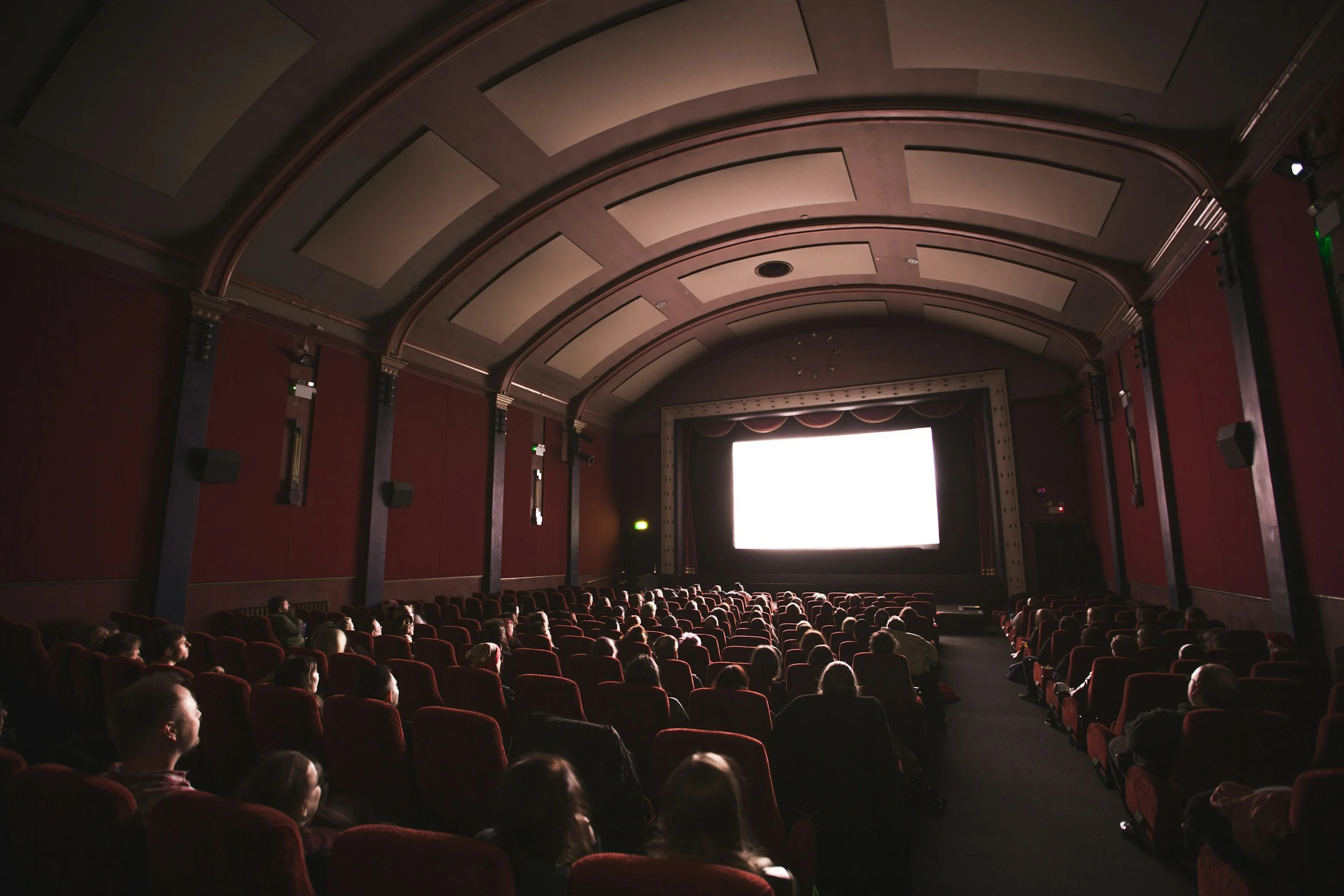
There are numerous differences between watching in the cinema and watching anywhere else, so let us start with the most obvious: the scale. In the cinema, the image is larger than you, but anywhere else, it is smaller than you. It is lesser to you, so you impose upon it. Its meaning does not come to you; rather, it comes from you. The viewer distorts the image, perverts it. Its essence is left latent within it, and the viewer remains ignorant of it. Thus, nothing is gained by the viewership except the untruth of the image, although the viewer may mistakenly believe otherwise.
In the cinema, however, the image is larger than any person; its spirit is large enough to possess you! Not only does everything around you disappear, but also your own consciousness. You disappear! The only thing left is the frame itself and everything within it. To surrealist filmmaker Alejandro Jodorowsky in the Frank Pavich documentary Jodorowsky’s Dune (2013), the motion picture possesses its own heart, mind, and ambition—Affection, Reason, and Will, which Ludwig Feuerbach in his Das Wesens des Christenthums (1843) established as the essential natural qualities of man. These three qualities are striven at for their own sake by means of themselves, and if the motion picture really possesses these determinations, then is it not a sentient living thing? Once more, the illusion captivates us, and that is precisely the power of the cinema—accessible only in the moviehouse, where it may dominate its audience. The picture feels realer than the real. Even in long shots and extra long shots, where the people are so much closer to our size, we are only meant to realise our own likewise minuteness against the rest of the image within the frame. At every instant within the moviehouse, the picture does not exist for us; we exist for its sake.
Then, in this existence of non-existence (since our consciousness fades away to make room for the picture), although brief is this state of being, because of the power of the illusion of the motion picture, we become habituated to it, so upon return to our own reality, our existence is now a non-existence of existence–until our eventual rehabituation to self-consciousness. This consciousness however is not the same consciousness, for the consciousness of another has left its impression upon it. While rehabituating ourselves to self-consciousness, the defamiliarisation (non-existence of existence) defines our rehabituation, so our consciousness—although still absolutely ours—is not the same as it once was. Permanently, by the cinema, we have been remade.
Ramon Emmanuel is an amateur filmmaker and student of the humanities with a special interest in Chinese cinema.