
The Church of Proper People: Liberal Yuppie Catholicism in the Philippines
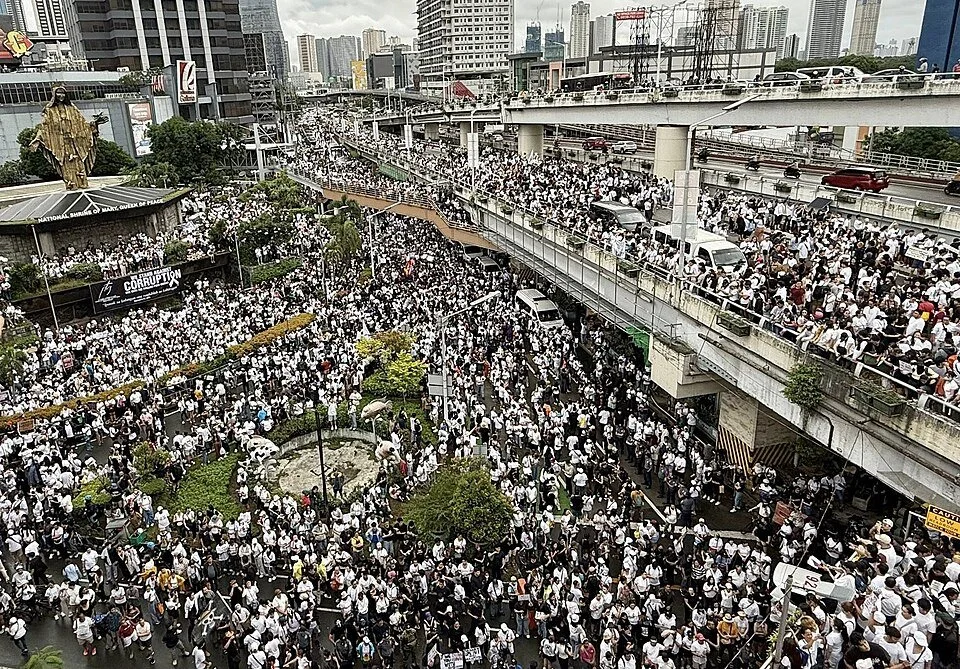
From postwar backing of the Free World to civic piety for Leni Robredo’s campaign, Manila Catholic liberalism comprises an urban status formation with Catholic habits. These yuppie Catholics take pride in being educated, respectable, institutionally loyal, fluent in lingo for “justice” and “compassion”. They exhibit attachment to schools, parishes, NGOs, professions, and legal institutions that produce and perpetuate this milieu. They speak of the poor, truth, democracy, human rights, discernment, and social transformation, yet their practical politic settle into clean elections, competent administration, professionalized charity, and moral disgust at vulgarity so-called.
Rooted in older Catholic imaginations of the Philippines as a Christian nation, a democratic outpost of the Free World, and a society endangered by godless materialism, this formation began with real concern for poverty, exploitation, and rural neglect. The hierarchy knew that communism drew strength from landlord abuse and social misery. Its answer was social repair under Catholic authority: reform enough to preserve peace, educate the people, and keep the working population inside a Christian national frame.
Energized by excitement and enthusiasm after Vatican II, Catholic public life moved toward social action, rural development, lay participation, national culture, human rights, and the “signs of the times.” The Church entered the government’s nation-building project as chaplain, conscience, partner, and examiner. It praised cooperatives, credit unions, farming improvements, skilled-manpower centers, housing, health work, and community development for their role in nation-building.
Edicio de la Torre and other radical Christians pushed that inheritance harder. For them, Filipino Christianity had to pass through land, labor, household survival, peasant associations, colonial inheritance, clerical privilege, and state power. Their path ran through farmers’ meetings, land-reform frustration, urban poor organizing, Freirean formation, student alliances, and direct encounters with governmental coercion.
Political violence under martial law exposed fault lines. Some churchmen accommodated Marcos, some spoke cautiously, and some entered direct service to detainees, farmers, workers, urban poor communities, and victims of military abuse. AMRSP, Task Force Detainees, Basic Ecclesial Communities, and figures like Labayen, Claver, Mananzan, and de la Torre made this Catholic witness to nation-building dangerous, concrete, and costly. Their judgments could be reckless, romantic, or doctrinally confused, yet at least they knew prisons, soldiers, landlords, courts, fear, and hunger.
After EDSA, that dangerous witness translated into civic virtue. The image of Catholic resistance became cleaner: prayer, ballots, nuns, Radio Veritas, NAMFREL, teachers, technicians, peaceful crowds, and honest citizens against a fraudulent ruler. This memory had real nobility, yet it also narrowed Catholic politics. The central drama became truth against lies, conscience against fear, clean procedure against corrupt power.
Moral seriousness then passed through PCP II, PPCRV, Catholic schools, Jesuit social apostolates, parish networks, NGOs, and voter-education campaigns. The Church of the Poor became pastoral program, institutional language, formation module, and civic machinery. Lay Catholics were encouraged to renew politics through competence, integrity, responsible voting, clean elections, and public service. Social transformation became legible to professionals, donors, bishops, administrators, and school-formed volunteers.
Poverty, under this settlement, became increasingly attached to bad governance, corruption, vote-buying, disinformation, historical forgetting, weak education, and failed civic virtue. These were real problems, yet they became too convenient a scapegoat for the yuppie milieu. These Catholics educated in administration, law, medicine, education, media, consultancy, NGO work, electoral procedure, and professional expertise condemned political decay without studying land, wages, ports, energy, debt, zoning, monopolies, remittances, police power, American pressure, school networks, and the local machines that actually govern ordinary life.
At its 2022 peak, these yuppie Catholics made the Church of Proper People visible. Catholic educators, lay councils, clergy groups, parish circles, and Jesuit-adjacent networks saw in Robredo a figure of competence, compassion, prayerfulness, cleanliness, and institutional safety. She could stand near the poor without threatening the arrangements that cushion the professional class. Pink politics gave that class a way to feel wounded, brave, tasteful, and righteous.
No account of this formation is complete without its social-conservative boundary. Manila Catholic liberalism can absorb good governance, human rights, anti-corruption politics, poverty relief, environmental concern, and women’s participation. Its hard line appears around contraception, abortion, divorce, sexuality, marriage, and family life. This is a Catholic formation that accepts liberal civic reform while preserving ecclesial authority over reproduction, household order, schooling, inheritance, respectability, and the transmission of status.
Given this structure, Manila traditional Catholics are best understood as intra-class dissenters. They often see through the sentimentalism, NGO polish, schoolroom moralism, and liturgical thinness of liberal Catholic life. Yet many share the same urban education, professional respectability, institutional loyalty, American references, family expectations, and suspicion of popular political judgment. Their revolt often becomes a struggle over who gets to define Catholic properness: the clean-candidate Catholic or the missal-and-mantilla Catholic.
All of this ends in an intellectual tragedy. The Catholic tradition has deep resources for thinking about authority, office, household, parish, town, property, trade, law, custom, sovereignty, and the moral limits of power. The Church of Proper People inherits little of that discipline. It sees values to affirm, voters to educate, candidates to endorse, sinners to denounce, and institutions to repair. It keeps the moral prestige of struggle while avoiding the harder labor of understanding the order from which its own respectability comes. If anything, they only mistook competence in narrow and repetitive domains for moral and political wisdom.
Mingshu Wang is a Northern Chinese political economist and mathematician born in the Philippines.