
The Idol of Security: Confronting Rigidity and Fear
My path to reintegrating into the Church was full of twists and turns. While I stopped being a Protestant around the middle of 2018 and started attending Mass regularly a few months later, I still rejected the Second Vatican Council and the popes after Ven. Pius XII. But my unease about the sedevacantist position lingered on, which became all the more serious during Christmas of that year. For various reasons, I decided to abandon the sedevacantist view and gradually shifted towards the viewpoints held by the Society of Saint Pius X.
Being around thirteen years old at that time, I still did not know much about what the Catholic Faith truly meant in my life. I prayed the rosary every day in fulfillment of a promise made to my confessor, but without meditating on the mysteries. I also spent most of my time online with fellow traditional Catholics, because nobody in school or at home shared my interest in traditional Catholicism or the Latin Mass.
This was further worsened by the coming of the pandemic, when I lost all access to the Sacraments and was pushed into becoming chronically online. Habitual sin, left unconfessed, only increased, and my life in the Church hit a dead end.
Yet, God allowed me to meet priests over at Facebook, who showed me the radical humanity of the clergy. At that time, I was still a clericalist who believed that priests—if they wore birettas and black cassocks while celebrating Mass ad orientem (facing the altar, traditionally positioned facing the East)—were automatically good and holy priests. I deferred to them in all things and could not understand the complexities faced by priests in the fulfilment of their state in life.
But they, too, were wounded men who also struggled with questions about the Church, Her teachings, and their place in Her bosom. I initially could not understand where they were coming from; instead, I opted to keep looking at the Church with rose-tinted lenses.
My friend Dr. Jose Mario Maximiano, in his series on church reforms, once discussed the fourfold internal crisis which the Church has faced throughout its earthly existence: clericalism, triumphalism, materialism and legalism. Looking back, I can see how my way of thinking fell into these four molds.
But something indeed was shaken in me: something that propelled me to accept the Church for what it is and reintegrate myself into its ordinary structures. While watching my fellow traditional Catholics defend the centrality of the Papal office and Magisterium, it dawned on me that I could no longer reject the rites promulgated by the authority of the Roman Pontiff nor the teachings of an ecumenical council duly ratified by the same papal authority.
In December of that year, therefore, I announced my submission to the Church’s magisterium and my acceptance of the reforms of the Second Vatican Council, thus reintegrating myself into the Church’s ordinary canonical structures.
Indeed, the Church’s challenges can and often do strengthen her faith. The perils of picking and choosing what Magisterial teachings were orthodox or harmonious with Tradition led me to realize the need to trust the Church and the teaching authority given to Her by Jesus Christ. But when I realized that I could no longer maintain my balance while walking on my self-imposed intellectual and spiritual tightrope, Faith prevailed. And if not for these disturbing challenges—God’s hidden way of nudging me to look deeper into the Church’s teachings—I would not be here today to proclaim the work of the Holy Spirit in my life.
Nevertheless, despite my acceptance of the Second Vatican Council, it took me quite a while to learn to trust the Holy Father. A few months after my acceptance of the Council and the Mass, Pope Francis laid down Traditionis Custodes, leaving many of my friends feeling hurt and betrayed. Some traditionalists were also my enemies—due to something of my own doing—and in my bitterness towards them, I said many things that only served to rub salt into their wounds. Being right, or being orthodox was something I took pride in—even at the expense of charity and prudence.
But I still maintained an interior distrust towards Pope Francis, fearing that one day he might do the impossible and destroy the Church forever. These fears and doubts stayed with me for a long while, even as I entered university. To distract myself from these doubts I began to write on topics such as national identity and philosophy, but in my intellectual pursuits I fell into the trap of intellectualizing the Faith.
As a person on the autism spectrum, I found it hard to relate to people concretely and began to see faith as a mere extension of reason. Trusting only in myself, God was relegated to the back burner of my soul; this only got worse as I started to build a life for myself in college. But within my inner world, my insecurities grew all the more: as I continued to store treasures on earth, God faded out of sight, except as an occasional platitude to crown my worldly efforts to belong somewhere and to be loved.
An observant priest asked me this haunting question: “if God took away everything you have and are, what will become of your faith then?” At that moment, I came face-to-face with the weakness of my own faith. I realized that almost everything about my life was built on sand; my practice of the Faith was mostly on an intellectual level.
Looking only at my own strengths, all I could see was the “inevitability” of abandoning God. Afraid to truly follow Christ on account of the difficulty of the things I feared He might ask of me, I drove myself deeper into earthly things and sought to live life according to my own terms. The fear of making mistakes grew within me along with the fear of trying out new things and of experiencing life’s dynamism with Christ by my side.
I worshipped the illusions of “safety” and “security,” and in attempting to maintain my grasp on these phantoms I wounded many, many people—especially those whom I loved most. But most of all, I sinned against God by lying to myself and closing myself off from the work of the Spirit.
When the Dicastery for the Doctrine of the Faith issued Fiducia Supplicans (which allowed for the spontaneous blessings of homosexual and irregular couples without blessing their ‘union’), I publicly defended it, but deep inside, my doubts returned and nearly caused me to leave the Church for good. I still saw Pope Francis’ pastoral praxis as a threat to the Church’s own internal safety and security.
I tried looking into Thomistic theology in the hopes of dealing with my anxieties through further intellectualization. But, as one would expect, my inner world collapsed on me. My sins alienated me from God and from others, and in the ruins of my life I knew I could do nothing but alternate between blaming God and pursuing Him with feverish devotion, all without solid virtue.
The ghosts of my failures haunted me, deepening my wounds as the world I thought was mine moved past me. All this, indeed, was because I valued stability, safety and security over the dynamism of life that could only come from living in the Spirit.
I once confided to my confessor that I was afraid of making mistakes. In response, he told me: when you become afraid of making mistakes, you become rigid. At first, I did not understand what he meant. Why shouldn’t I be afraid to make mistakes, to ruin my own life, maybe even to sin by mistake? As someone suffering from scruples and OCD, the fact that one could not commit a mortal sin if one did not have full knowledge or consent was swept aside.
The pretext of ‘not offending God’ was used to hide my own worldliness and perfectionism—my own rigidity which prevented me from seeing past my shortcomings and the “rules” of being a Catholic. By becoming fixated on the rules instead of living my life in Christ, I missed the forest for the trees. I was afraid to trust God’s plan for my life, or for His own Church.
Rigidity, indeed, betrays fear and a lack of trust in the Spirit. It betrays a lack of trust in a merciful God who has already taken our mistakes and shortcomings into account. I remember how during a low point in my life, my friend—a fellow TLM Catholic—told me: When discerning God’s plan for your life, don’t forget that he has already factored in your stupidity. And this has always been the case throughout the Church’s life.
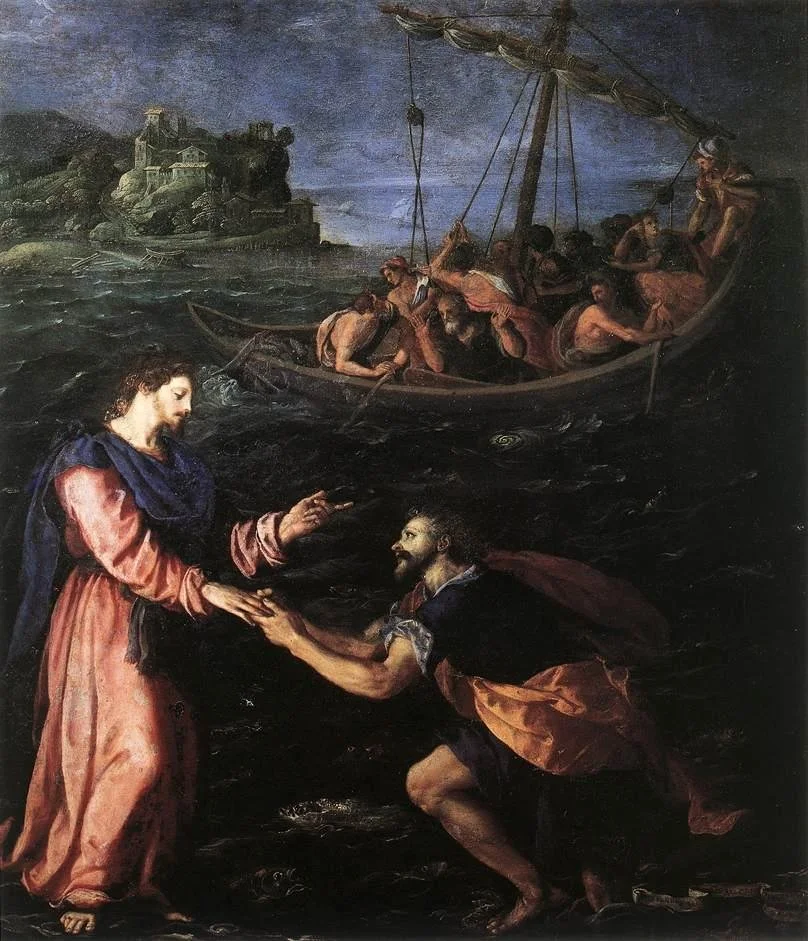
We are aware of the various questions faced by the Church today, both in our own parishes and dioceses up to the Vatican itself. Our ancient Church faced the new millennium wounded by her caregivers, dazed by the flashing lights of scandal in the media, and for a long moment it seemed as though She could no longer find her way. The worldly mob lunged at her, seeking to take her where she would not want to go (Jn 21,18). But even as all seems lost, the hand of the Lord is steady at the helm, directing his Barque north as He overcomes the wind and waves (Mt 8,27).
And one of the greatest gifts He gave to the Church is its ability to reform, its ability to account for our mistakes. It is precisely this gift that allowed Pope Francis to embark on a new era of synodality for the Church, so that we, though sinners, may walk with Christ, trusting in His providence and mercy in spite of our weaknesses and sins.
